

How to Navigate the Global Fiber Shortage: Strategic Sourcing for 2027 and Beyond
- Nov 19th 2026
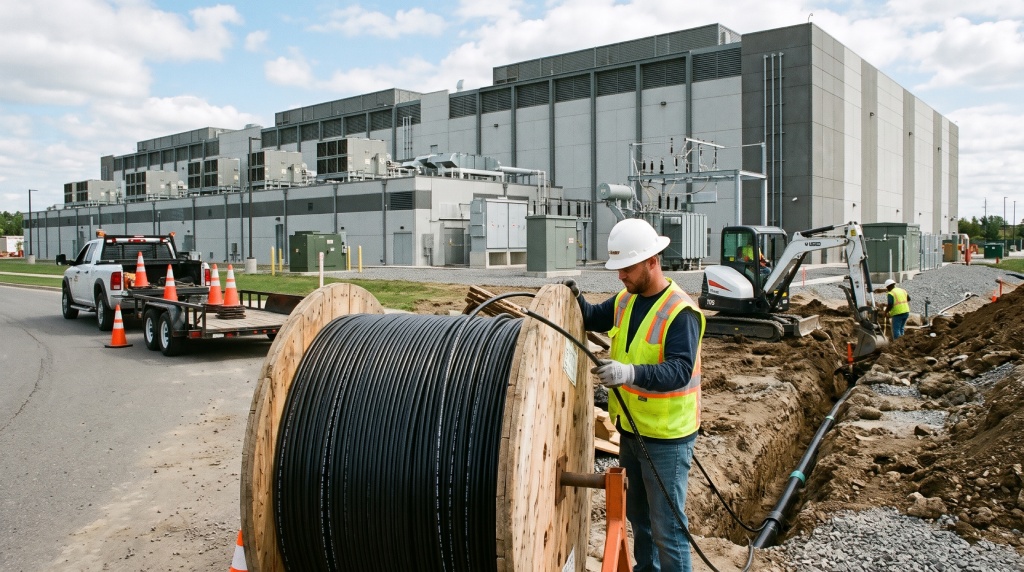
The bulk fiber optic market—particularly singlemode fiber—is facing a severe global supply crunch marked by soaring prices and unprecedented lead times. Driven primarily by the AI boom, widespread broadband rollouts, and 5G mobile access, these pressures are compounded by raw material constraints. Industry analysts are already calling it a “perfect storm.”
While navigating a market dominated by high demand and shortages may seem daunting, strategic procurement practices can help insulate your projects from critical supply bottlenecks.
What Is Causing Extensive Lead Times for Bulk Singlemode Fiber?
AI networks require far more optical connectivity than traditional data center networks, with some GPU clusters demanding up to 36 times more fiber cabling. Despite recent high-profile project cancellations totaling more than $260 billion, several large AI-driven data center projects continue to push forward. Meta’s massive 5 gigawatt (GW) Hyperion supercluster in Louisiana and its 1 GW, 4-million-square-foot campus in Indiana are actively progressing. Meanwhile, OpenAI has broken ground on Phase 1 of a 10 GW campus in Ohio and is working around the clock on a 1.2 GW Abilene, Texas facility slated to house 400,000 NVIDIA chips. With this momentum, AI data centers are on track to consume 30 to 35% of the world’s optical fiber production in 2027.
Beyond the fiber required for intra-cluster GPU fabrics, data centers must also maintain continuous ultra-high-bandwidth interconnectivity. Operators are aggressively deploying high-count singlemode fiber cable for data center interconnects (DCIs), while simultaneously investing in transoceanic routes that consume tens of thousands of miles of submarine singlemode fiber. More than half of all global subsea cable demand is now driven by just four hyperscalers: Meta, Google, Amazon, and Microsoft.
At the same time, regional access networks are expanding. Service providers are deploying millions of fiber-kilometers to deliver broadband to underserved communities via the $42 billion Broadband Equity, Access, and Deployment (BEAD) program. Mobile carriers continue to consume massive strand volumes for the backhaul and midhaul infrastructure needed for low-latency 5G densification. In parallel, utilities and transportation authorities are installing fiber along high-voltage transmission lines, highways, and rail corridors to support smart grids and intelligent transportation systems, while industrial, broadcast, and defense sectors drive additional demand for Industry 4.0, ultra-HD live streaming, and secure operational communications.
Compounding this demand surge are acute upstream manufacturing bottlenecks—most notably a global squeeze on high-purity helium, a critical inert gas used to rapidly cool preforms during the fiber-draw process. Escalating Middle East conflicts and transit disruptions through the Strait of Hormuz have sidelined roughly one-third of global helium exports. Qatar, which typically accounts for 30 to 35% of the world's commercial helium, was forced to take significant capacity offline due to military strikes in the region, while stranded shipments held past typical 45-day transit windows have begun boiling and venting off to avoid catastrophe. With the U.S. Federal Helium Reserve now fully privatized and largely depleted, there is virtually no strategic cushion to offset the deficit.
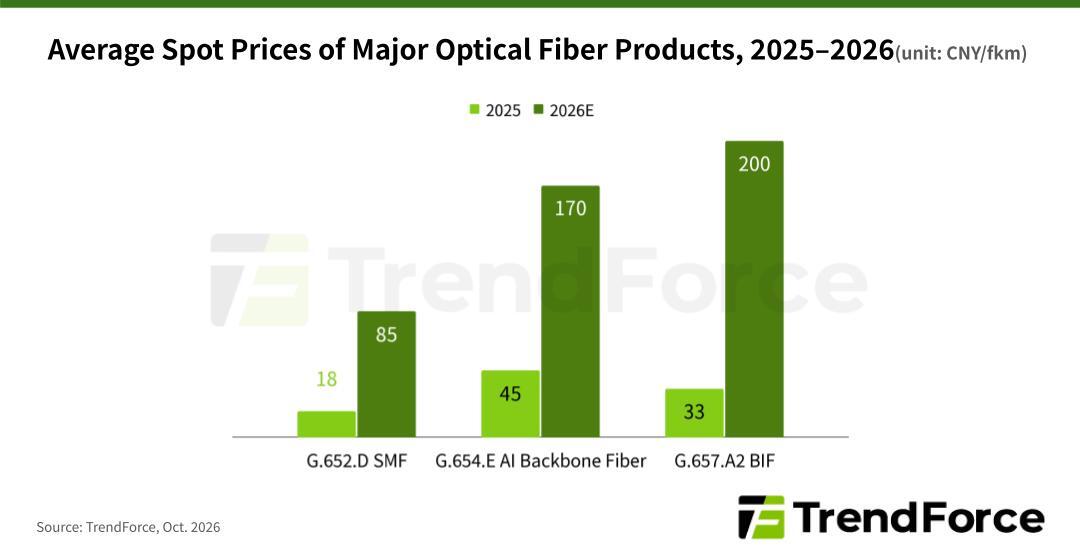
According to an October 2026 report by TrendForce, these colliding forces are hitting supply chains with historic severity:
- Global fiber demand is projected to hit 358.5 million fiber-miles this year against a shortfall of about 112 million fiber-miles.
- Worldwide inventories have plummeted from a healthy four-month supply in 2024 to just a one-month supply today.
- Prices for finished singlemode cables have spiked to roughly 3 to 6 times their 2025 levels, with tight conditions expected to persist throughout 2027.
While both singlemode and multimode market segments are affected, singlemode fiber bears the brunt of the supply shock. Singlemode remains the default transmission medium for AI clusters and longer-haul DCIs, submarine links, broadband deployment, and metro/mobile infrastructure. Consequently, while standard bulk multimode is seeing manageable lead times of 10 to 15 weeks and price increases of 50 to 70%, standard singlemode lead times often exceed 20 weeks, with some specialty, bend-insensitive configurations stretching to more than a year and seeing price increases of 500%.
How Can You Protect Your Projects from Fiber Shortfalls?
To safeguard buildouts against singlemode shortages, hyperscalers are bypassing traditional channels to negotiate direct, multi-billion-dollar deals with primary manufacturers. With the ability to absorb aggressive price increases, these tech giants are effectively pulling factory capacity away from the rest of the market.
For service providers, neoclouds, colocations, and enterprise network teams, surviving these supply chain constraints requires shifting from reactive purchasing to proactive procurement strategies:
- Lock in long-term agreements: Forward-thinking operators are securing multi-year volume commitments that tie delivery directly to scheduled production lines rather than warehouse inventory. These frameworks frequently leverage index-based pricing models to prevent factory allocations from being reallocated to higher-margin hyperscale spot buys. For example, in September 2026, Verizon negotiated a massive capacity reservation with a leading fiber manufacturer for 80 million fiber-miles through 2032, locking in factory output years in advance.
- Broaden technical specs: Rigid, single-SKU engineering standards can stall projects indefinitely during an allocation crunch. Working with engineering to establish flexible, pre-approved alternative specifications wherever possible can help keep projects moving. For example, specify standard singlemode alongside bend-insensitive options where pathway radius permits, or approve pulling fiber through conduit as an alternative to interlocking armored designs. Pre-qualify these part numbers now to eliminate lengthy engineering redesigns and review cycles during procurement.
- Diversify supplier and distribution channels: Relying on a single global manufacturer introduces single-point-of-failure risk. Broaden your supplier matrix by expanding OEM contracts, qualifying secondary regional manufacturers, and establishing relationships with independent distributors who maintain broader factory allocations across multiple manufacturers.
- Modernize inventory and staging models: Traditional just-in-time delivery is ill-suited for a market with lead times of 20 to 52 weeks. Where feasible, explore consignment stock or vendor-managed inventory arrangements. For critical path deployments, maintain a strategic buffer of 6 to 12 months of high-turnover cable constructions at regional staging locations or third-party logistics warehouses.
Plan Ahead and Order Bulk Fiber Now!
The single most effective action you can take to mitigate fiber supply shortages and extended lead times is to forecast aggressively. Audit your project roadmaps across the next 18 to 36 months, quantify your baseline strand counts across all planned pathways, and get your orders in now!
The good news is that you can navigate an unprecedented supply chain crunch with a supply chain partner like Cables Plus USA. Backed by more than two decades of established supplier partnerships and deep industry footing, Cables Plus USA delivers quality products with speed, integrity, and transparency. Contact our team today to review your bill of materials, evaluate pre-qualified alternatives, and secure the bulk fiber you need to keep upcoming builds on schedule. We will work diligently to meet your procurement needs to the best of our ability—every step of the way.