

High-Bandwidth Point-to-Point Cables: Understanding DACs, ACCs, AECs, and AOCs
- Aug 23rd 2026
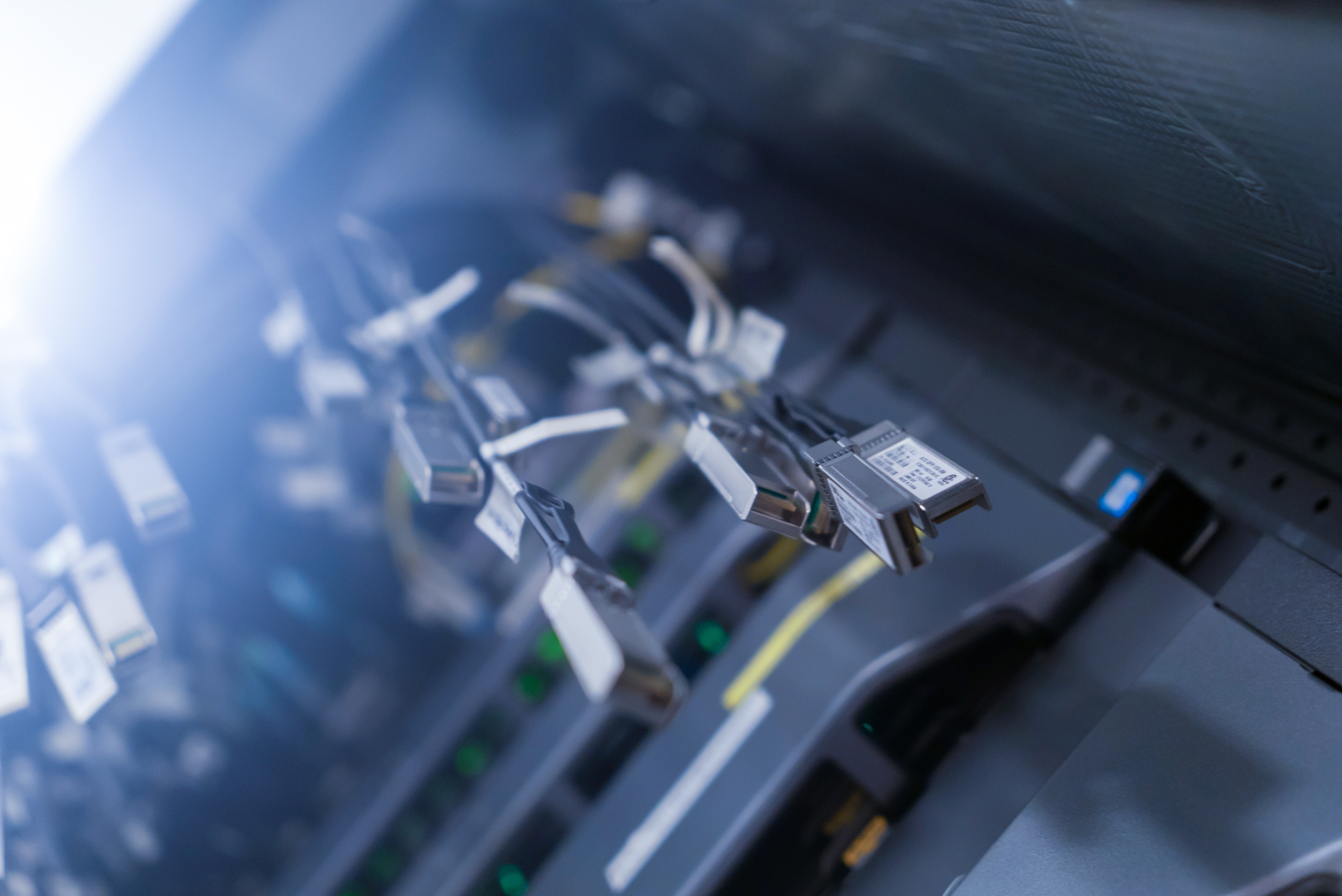
Interconnects between switches, servers, and storage in the data center boil down to two key choices: traditional structured cabling with discrete transceivers or direct point-to-point cables with embedded transceivers.
While structured cabling excels for longer reaches and maximizing manageability and flexibility via convenient patching areas, high-bandwidth point-to-point copper and fiber cables are ideal for shorter, high-bandwidth links that demand deployment speed, latency, power efficiency, and lower upfront cost. They have become indispensable for switch-to-server intra- and adjacent-rack connections, as well as for connecting dedicated storage switches and arrays and interconnecting GPU nodes in modern high-performance computing (HPC) and AI environments.
However, point-to-point cables aren’t a one-size-fits-all. From direct-attach copper cables (DACs) to active copper cables (ACCs), active electrical cables (AECs), and active optical cables (AOCs), each option comes with its own pros and cons. Let’s break down how they compare to help you choose which point-to-point cables are right for your deployment.
Multiple Form Factors, Speeds, and Breakout Configurations
DACs, ACCs, AECs, and AOCs come in single-, four-, and eight-lane configurations to support speeds from 10 to 800 Gig:
- SFP+: Single-lane supporting 10 Gig (NRZ)
- SFP28 DACs: Single-lane supporting 25 Gig (NRZ)
- SFP56 DACs: Single-lane supporting 50 Gig (PAM4)
- QSFP+ DACs: Four-lane supporting 40 Gig (4X10 Gig NRZ)
- QSFP28 DACs: Four-lane supporting 100 Gig (4X25 Gig NRZ)
- QSFP56 DACs: Four-lane supporting 200 Gig (4X50 Gig PAM4)
- QSFP-DD: Eight-lane supporting 400 Gig (8X50 Gig PAM4) or 800 Gig (8X100 Gig PAM4) QSFP112 DACs: Four-lane supporting 400 Gig (4X100 Gig PAM4)
- OSFP DACs: Eight-lane supporting 400 Gig (8X50 Gig PAM4) or 800 Gig (8X100 Gig PAM4)
Point-to-point cables are also widely available in breakout configurations to support 4X10 Gig, 4X25 Gig, 4X50 Gig, 4X100 Gig, 4X200 Gig, 2X200 Gig, 2X400 Gig, 8X25 Gig, 8X50 Gig, and 8X100 Gig. A common real-world deployment is using a 2X400 Gig breakout cable to connect two 400 Gig GPUs into a single 800 Gig switch port.
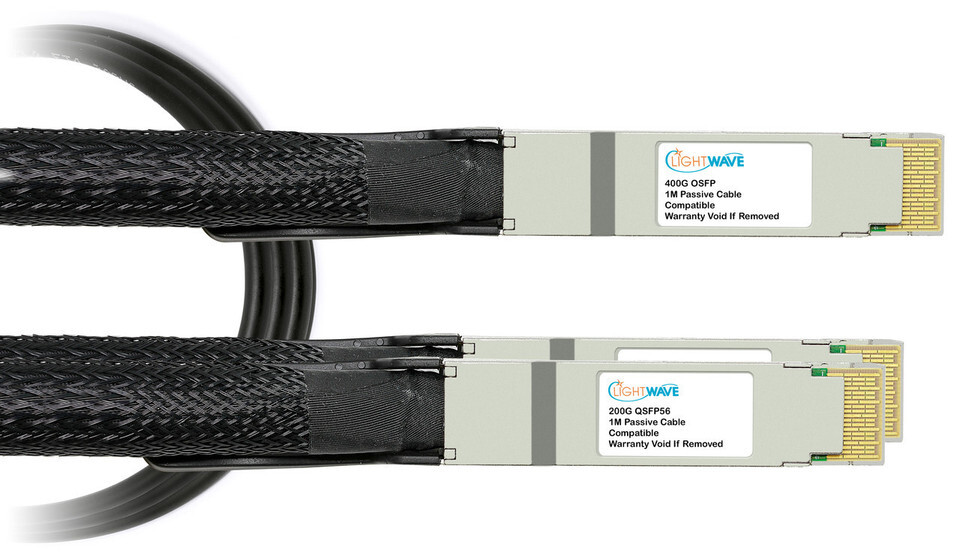
Direct attach cables (DACs)
DACs are fixed-length twinax copper cables with embedded hot-pluggable transceiver connectors on each end. Because they feature a passive design with no active electronic signal amplification, DACs are built purely for short-reach connections — typically spanning 0.5 to 3 meters for high-speed PAM4 links and up to 7 meters for lower-speed NRZ links.
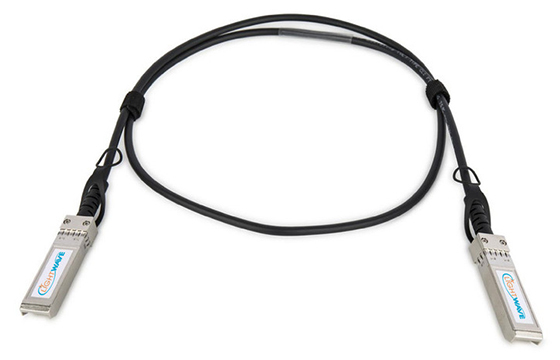
Due to their limited distance, DACs excel in top-of-rack (ToR) architectures linking switches and servers, network-attached storage (NAS) systems, or GPU nodes within the same rack. As a copper-based, passive point-to-point cable with no optical-electrical conversion, DACs deliver ultra-low latency, the lowest power consumption, and the lowest upfront cost. This makes them ideal for short-reach, budget-conscious small HPC and AI cluster links. However, because DACs feature a larger diameter, they are not well suited to large high-density environments — they can be difficult to route and can impede airflow.
Active Copper Cables (ACCs)
Often referred to as “active DACs,” ACCs add active components to their embedded transceivers to boost the signal. This active design extends reach slightly beyond passive DACs. For instance, where a passive 10 Gig SPF+ DAC reaches up to 7 meters, an ACC equivalent can reach up to 12 meters. This makes ACCs a more practical fit for middle-of-row (MoR) architectures, where switches connect to servers/GPUs across adjacent cabinets. ACCs retain low latency, but they consume more power and typically carry a price premium compared to passive DACs.
Active Electrical Cables (AECs)
AECs take active copper a step further. Instead of basic signal boosting, AECs embed advanced digital signal processing (DSP) retimers directly into their transceivers. This technology actively cleans up digital signals, eliminates noise, and reduces jitter. The DSP handling also allows AECs to use thinner copper gauges. The resulting smaller cable diameter reduces bulk and improves bend radius and airflow in high-density racks.
AECs are primarily targeted to high-speed HPC and AI applications (400 Gig and 800 Gig) and are commonly deployed in QSFP-DD, QSFP112, and OSFP form factors. Although they consume more power than DACs and ACCs, their superior signal integrity makes them ideal for AI networks. They are therefore projected to capture substantial market share among point-to-point cables over the next five years.
Active optical cables (AOCs)
Unlike copper-based options, AOCs use fiber optic cable with embedded optical transceivers that convert electrical signals into optical and vice versa.
AOCs leverage the physical advantages of optical fiber to reach up to 100 meters, making them the longest-distance option of all the point-to-point cables. They are ideal for MoR, end-of-row (EoR), and row-to-row links. Because optical fibers are significantly lighter and thinner than twinax copper, AOCs offer a smaller diameter, simplifying cable management, routing, and airflow optimization in high-density environments.
Key Considerations
While point-to-point cables are the clear choice for short, low-latency, and power-efficient links, direct connections carry trade-offs. In massive deployments, relying solely on point-to-point cables can lead to clutter and chaos that impede airflow and complicate manageability and troubleshooting. Consequently, they are best suited for single-purpose clusters in small-to-medium deployments.
When migrating to next-generation speeds, point-to-point cables must be replaced entirely (i.e.., “rip and replace”). Additionally, point-to-point cables must be programmed for compatibility with the active equipment they connect to (e.g., Alcatel, Allied Telesis, Cisco, Dell, HPE, Juniper, Nvidia, etc.). If the switch platform changes, the cables may require replacement.
Conversely, structured cabling with discrete transceivers provides a permanent, organized infrastructure. By routing connections through patch panels, structured cabling allows data center teams to perform moves, adds, and changes (MACs) without disturbing active equipment. Fiber optic structured cabling also supports distances up to 2,000 meters or more, making it essential for leaf-to-spine backbone links and inter-facility data center interconnects (DCIs).
While structured cabling requires a higher initial investment, it provides unmatched long-term agility. Modern fiber optic structured cabling is interoperable with any active equipment’s transceivers and can support from 1 to 800 Gig and beyond. It can remain in place across multiple generations — only the discrete transceivers and active equipment are upgraded. This significantly lowers long-term operational costs in dynamic enterprise data centers.
Comparison Summary
| DAC | ACC | AEC | AOC | Structured Cabling | |
|---|---|---|---|---|---|
| Primary Architecture | ToR | ToR, MoR | ToR, MoR | MoR, EoR | MoR, EoR, backbone, DCI |
| Max Reach | 3 to 7 m | 10 to 14 m | 10 to 15 m | 100 m | 2000 m+ |
| Latency | Lowest | Low | Low | Low | Moderate |
| Power Consumption | Lowest | Low | Moderate | Moderate | High |
| High Density (airflow, bend radius, etc.) | Low | Low | Moderate | Moderate to High | High |
| Upgradeability | Low (Rip & Replace) | Low (Rip & Replace) | Low (Rip & Replace) | Low (Rip & Replace) | High (Multiple Generations) |
| CapEx | Lowest | Moderate | Moderate | Moderate to High | Highest |
| OpEx | Moderate | Moderate | Moderate to High | Moderate to High | Lowest |
The good news is that Cables Plus USA offers a comprehensive line of high-bandwidth point-to-point cables from 10 to 800 Gig, including breakout options and compatibility with leading switch manufacturers. If your deployment requires structured cabling, Cables Plus USA also provides high-density fiber optic connectivity and discrete transceivers.
Contact our engineering team today for help selecting the right cabling architecture for your data center.